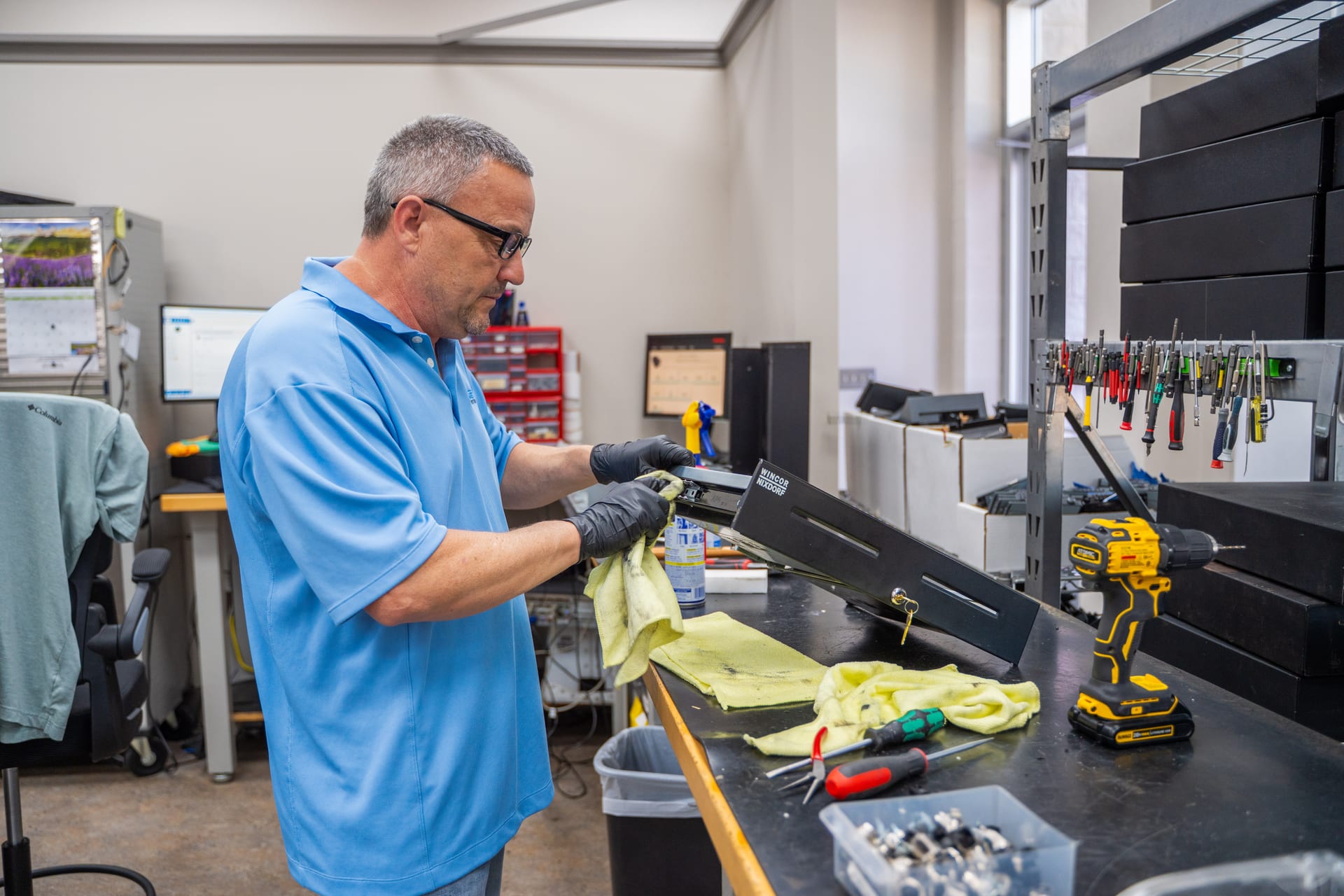
Retailers often default to replacement when POS hardware begins to fail. It feels like the safest option—but it is rarely the most economical one. The pressure to maintain operational continuity can drive quick replacement decisions without fully evaluating the true cost implications or exploring alternatives.
The Hidden Costs of POS Hardware Replacement
Research from Gartner in their “Managing the Total Cost of Ownership for IT Hardware” study shows that the majority of IT costs occur after deployment, not at the point of purchase—typically 60–70% of lifecycle costs emerge in years 2–5 of ownership. That means every replacement decision carries downstream costs in deployment, configuration, integration, training, and ongoing support that often exceed the initial hardware investment itself.
Benefits of POS Repair and Refurbishment Programs
Leading retailers are taking a different approach. They are extending the life of their existing assets through structured repair and refurbishment programs. Depot maintenance, component-level repair, and access to quality replacement parts can reduce total cost by 30–50% compared to wholesale replacement. This strategy also reduces electronic waste and supports sustainability goals that increasingly matter to both customers and investors.
The key is having the right process in place. Devices must be properly diagnosed, repaired with reliable components, and fully tested before returning to the field. Without that discipline, failure rates remain high and costs compound. A methodical approach to triage and repair actually improves system reliability over time by catching issues before they cascade.
Data-Driven Lifecycle Management with Asset Enterprises
Asset Enterprises supports this model by combining repair expertise with parts sourcing and lifecycle visibility. Instead of reacting to failures, retailers can make informed decisions based on actual performance data. This data-driven approach enables predictive maintenance and smarter capital planning across the entire store infrastructure.
The result is straightforward: lower capital spend, fewer disruptions, and a more predictable maintenance model. Retailers who embrace lifecycle extension strategies gain a competitive advantage through improved margins and operational stability.