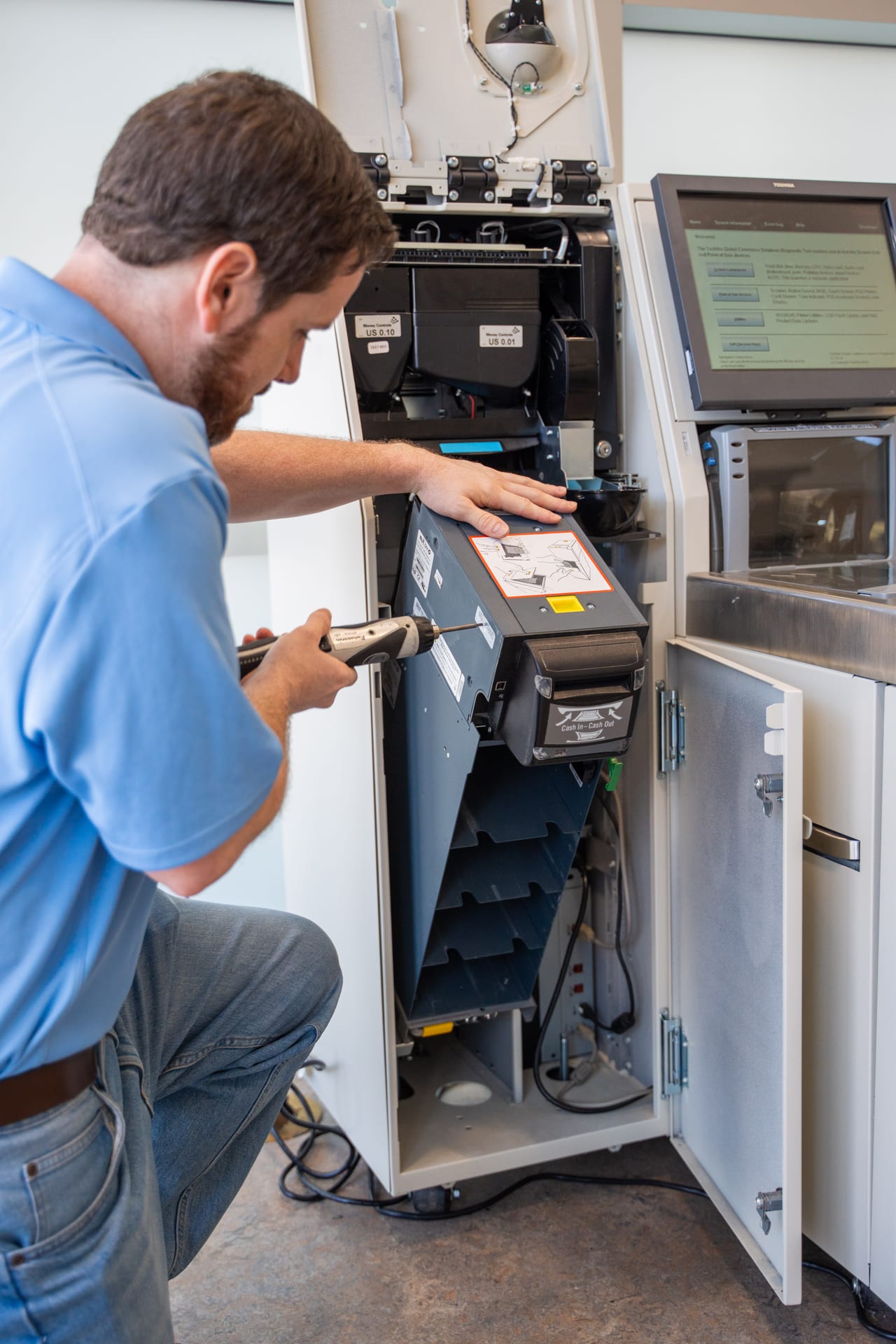
A custom application can become expensive technical debt. An off-the-shelf platform can force a retailer into someone else’s operating model. Either choice can fail when stores, networks, devices, payment systems, software vendors, help desks, and field technicians are managed as separate contracts instead of one customer-facing service. Retail technology strategy is decided at those seams, and it starts with a sharper question than build or buy.
Retail Technology Strategy Starts With the Operating Model
The useful question has three parts: What must the retailer own? What can a specialist provide? And how will the whole environment operate as one? Answer those first, and build versus buy becomes a portfolio of capability decisions instead of a single bet.
Build Where Capability Creates Advantage
Building makes sense when a capability materially differentiates the business: proprietary pricing logic, a distinctive loyalty experience, unique fulfillment workflows, or data products competitors cannot easily copy. Even then, leaders should confirm that the organization can fund product management, security, testing, support, and continuous improvement, not just an initial release.
The execution gap is measurable. In Deloitte’s 2026 survey of 200 retail and consumer-products executives, 75% called AI a top strategic priority, but only 16.5% could quantify a return. That suggests proprietary technology creates value only when business ownership and scaling discipline match the ambition.
Buy Where Standards and Scale Matter
Buying is usually stronger for mature capabilities such as payment platforms, device management, service management, network monitoring, and commodity infrastructure. Established products can spread security updates, compliance work, and development costs across many customers.
Favor configuration over customization. Require documented interfaces, data portability, service levels, lifecycle support, and a workable exit path. A low purchase price can be misleading if integration, store rollout, or vendor lock-in raises the total cost of ownership.
Orchestrate the Retail Technology Ecosystem
Most retail estates are hybrid. Orchestration means the retailer owns the operating model while specialized partners provide platforms, hardware, deployment, support, or field service.
Five responsibilities should remain firmly governed by the retailer: enterprise architecture, data and interface standards, security and compliance accountability, resilience priorities, and vendor performance. NIST’s 2026 supply chain due-diligence quick-start guide recommends assessing suppliers across five areas: foreign ownership, control, or influence; provenance; resilience; foundational cyber practices; and supply chain tiers. For payments, the PCI Security Standards Council says customers must oversee third-party relationships, define which requirements fall to each party, and monitor providers’ compliance status at least annually.
Put the Decision Into Practice
Score each capability on five questions: Does it differentiate the customer or associate experience? Is the market solution mature? How critical are availability and integration? What control is required? What are the full lifecycle and exit costs?
Then test the model across one complete store journey, such as transaction through settlement, rather than one system at a time. Name the service owner, define measurable outcomes, map escalation paths, and rehearse recovery.
Running the Model With a Partner
At Asset Enterprises, we help retailers coordinate deployment, infrastructure, service partners, and field execution so the chosen platforms perform consistently at store level.
Bottom Line: Retail Technology Strategy Is an Ownership Decision
Start with the target operating model rather than a sourcing preference. Build selectively where proprietary capability earns an advantage, buy where standards and supplier scale are more valuable, and orchestrate the ecosystem with clear internal accountability. Owning every component matters less than owning how every component delivers the retail outcome. Contact Asset Enterprises to turn the scorecard into a working sourcing plan for your estate.