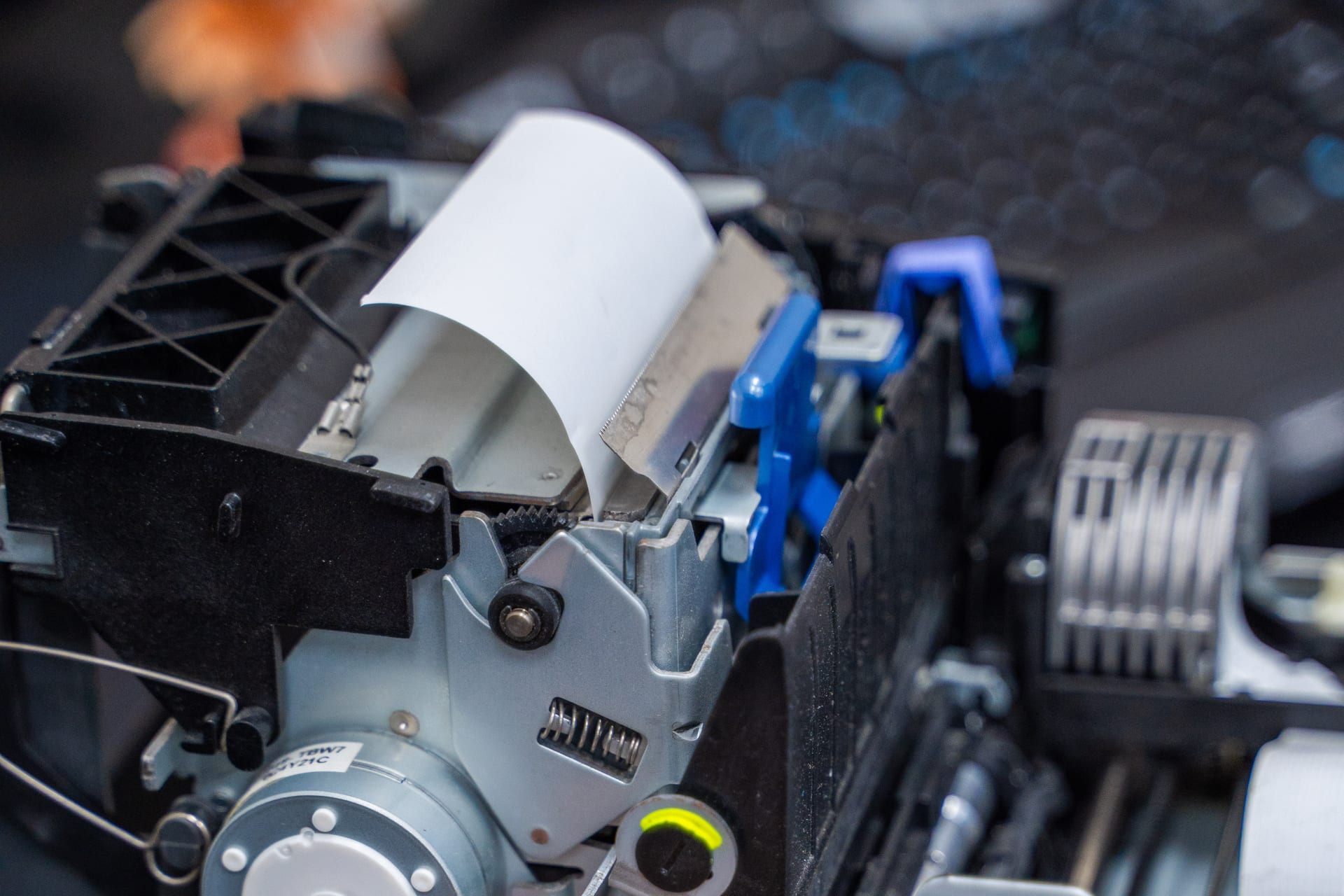
Most retail leaders never see what happens after failed equipment leaves a store. Yet the discipline inside the POS repair depot determines whether that device returns ready for service or triggers another ticket, another shipment, and another field visit. A high-performing depot treats every unit as part of a controlled lifecycle, with accountability at each handoff.
A POS Repair Depot Begins With Structured Intake
The process starts with structured intake. The best providers integrate with the retailer’s ticketing or asset-management system, capture serial numbers and warranty data, document condition, and assign a traceable status. That reduces manual entry, speeds triage, and gives operations teams visibility into where each unit sits. If intake is inconsistent, everything downstream becomes harder to measure.
Diagnostics Must Reflect the Store Environment
Manufacturer diagnostics are a starting point rather than the finish line. A capable depot reproduces real-world conditions, verifies configuration, checks peripherals and connectivity where relevant, and records the failure found. After repair, the same rigor should be applied to final testing. The goal is not simply to make the device power on; it is to return a unit that can be deployed with confidence.
Warranty and Parts Policies Protect the Budget
Warranty status should be checked before any billable repair begins. A strong partner also manages eligible claims and reports the savings back to the retailer. Just as important, retailers should know whether replacement parts are new, manufacturer-approved, remanufactured, or harvested. Lower-cost components may be appropriate in some programs, but the policy, the testing standard, and the expected reliability should all be transparent.
Process Discipline Reduces Repeat Disruption
Recent research reinforces why documented procedures matter. Uptime Institute’s Annual Outage Analysis 2026 reports that failures to follow established procedures remain the leading driver of human-error-related outages. The same report, drawing on the Uptime Institute Global Data Center Survey 2025, found that 57% of respondents said their most recent major outage cost more than $100,000. The study covers broader digital infrastructure rather than POS depots, but the operational lesson transfers: repeatable steps, quality gates, training, and audit trails are essential controls.
Turnaround Time Needs a Measurable Promise
Turnaround time should be defined by device class, measured from receipt to ship-ready status, and backed by an SLA. Retailers should track on-time completion, no-fault-found rates, repeat failures, warranty recovery, and units awaiting parts. Those measures expose bottlenecks and make spare-pool planning more reliable.
Refurbishment Extends the Value of Existing Assets
The best partners also evaluate de-installed equipment for refurbishment, reuse, parts recovery, or responsible recycling. That matters because the Global E-waste Monitor 2024, published by UNITAR and the ITU, reported a record 62 billion kilograms of e-waste generated in 2022, of which only 22.3% was documented as formally collected and recycled in an environmentally sound manner. A disciplined refurbishment program can strengthen the spare pool, defer purchases, and keep serviceable hardware in productive use longer.
Turning Repair Into a Measurable Program
At Asset Enterprises, we help retailers build a repair and refurbishment program around uptime, visibility, and lifecycle value, so every unit that leaves a store is tracked, tested, and accounted for on its way back to service.
Bottom Line: A POS Repair Depot Is a Control System
A POS repair depot can be a cost-control engine or a hidden source of downtime. Evaluate partners on intake visibility, real-world testing, warranty recovery, parts transparency, measurable turnaround time, repeat-failure reporting, and refurbishment capability. The depot is where a failed device either rejoins the fleet or quietly becomes another interruption at the register.